Best Ecommerce Fulfillment Services & Solution providers Dubai, UAE

How Fulfillment Centers Can Help Your Online Businesses Grow?
Online business is emerging faster than any other business model around the globe. Especially during the pandemic, online businesses created a huge impact and set a new trend among retailers, and force them to go online. Small and medium enterprises want to start their ecommerce platform but don’t have a lot of money. There has never been a better time to start cost-effective online business with help of ecommerce fulfillment centers using user-friendly and accessible technology. Let’s go deep into the topic and discuss how fulfillment centers can support your online business.
What is an E-commerce Fulfillment Center?
Small and medium online business companies face challenges when multiple orders are placed as it requires detailed inventory management, picking and packing the articles, and handing the parcel to courier services for the last mile delivery. The majority of the time is spent on these operations instead of growing sales.
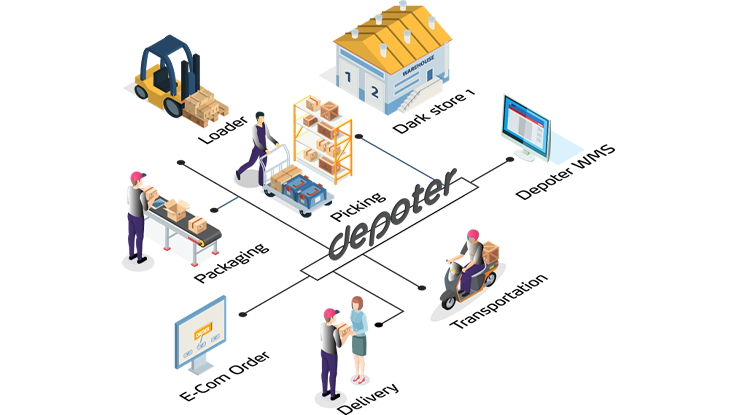
To resolve these challenges, partnering with a fulfillment center is one of the best solutions to which online brands have started relying on. A fulfillment center provides physical storage space to multiple ecommerce retailers to store their inventory in a more organized manner compared to traditional warehouses. A tech-enabled fulfillment center, Depoter, would parallelly integrate the ecommerce site with its warehouse management system (WMS) so that a fulfillment center can be notified when online orders are placed. The fulfillment center allocates the orders to warehouse associates who process and fulfill the orders using scanners which are usually integrated with WMS. Finally, the delivery partner will be notified, through WMS, of the parcels to be picked and delivered.
Managing inventory single-handedly increases the chance of back-orders which will eventually lead to unhappy customers. Outsourcing your inventory management and logistic operation to third-party fulfillment service providers helps in the consistent and smooth flow of your online business.
How fulfillment centers differ from typical warehouse and logistic companies?
Both Fulfilment centers and warehouses store inventory, albeit, differ significantly at service and operational level:
| Fulfillment Centers | Typical Warehouses |
|---|---|
| - Short term contract and charges you only for space you utilize | - Long terms commitment and cost you for unused spaces as well |
| - Short turnaround time for order processing | - Long turnaround time for order processing |
| - Real-time tracking of inventory, packing, and delivery | - Real-time tracking is compromised |
| - Can perform order processing, pick, pack and delivery via a single channel | - Provides only storage facility and no connection with fulfillment technology |
| - Usually, zero upfront cost and no or limited fixed monthly costs | - Involves initial setup cost and fixed monthly costs such as employees, DEWA, etc. |
Outsource the burden of inventory management, order management, and delivery management to Depoter
The success of any online business is measured in terms of customer satisfaction. If you can satisfy your customer with faster order fulfillment, safe and secure packing and above all same/next day delivery, they are more likely to recommend your online business to their friends and family and a high chance of customer retention.
Tech-enabled ecommerce fulfillment service provider, Depoter can ensure that your customer will receive high quality service based on the requirement. Depoter will take care of storing inventory, integrating your website with its warehouse management software to process online orders, picking, packing, and last-mile delivery. Furthermore, Depoter will notify you and your customers of each process, thereby, allowing you to focus on growing online sales.
5 Custom Packaging Tips for Ecommerce Fulfillment
An age-old business mantra “Customer is the King”, emphasizing the importance of the customer in every aspect of a business. Even in the modern era of online businesses, making the king happier by offering what is best in terms of quality products, fast delivery, special offers, and safe and secure packaging is important. Ecommerce companies and brands always find new ways to make the customer happy no matter what. So the packaging is not only to protect your product during the shipping but also a potential marketing opportunity to connect with the customer even after the wonderful shopping experience. For many such reasons, custom packaging is now becoming a vital part of online businesses to protect the package during shipping and also to provide a memorable unboxing experience to many consumers.
Why Use Custom Packaging?
Before we start discussing key tips on fulfillment-friendly packaging, we should consider a few statistics which emphasizes why D2C brands and online stores should consider custom packaging in the first place:
- 40% of customers prefer to buy from brands that provide custom packaging
- More than 70% of customers feel brands which are using custom packaging are more premium
- 30% reduction in customer retention cost if brands are using custom packaging
Clearly, repeat customers are likely to increase their basket size if they get a sense that your products are nicer, and you are taking an extra step to make their buying experience delightful using custom packaging. In parallel, you need to ensure that i) your partner fulfillment center is well aware and trained on your custom packaging to avoid increasing the shipping costs, ii) there is enough space on the backside of the box for sticking shipping slip along with the airway bill number and iii) packaging material is strong enough to hold items until last-mile delivery is concluded.
How you can get all the benefits of custom packaging without unreasonable costs or fulfillment mishaps:1. Keep the package small and light
Last-mile delivery is nearly 70% of the fulfillment cost and it could go even higher in the case of reverse logistics. There is no secret that delivery companies’ are charging on the volumetric weight and bigger and heavy packages cost more to deliver. That's why, as much as you possibly can, you should keep your packages small and lightweight. In e-commerce fulfillment, the smallest packaging box could be as small as 15cm*7cm*10cm and you can still make it beautiful with unique custom packaging.
2. Buy packaging materials in bulk
As a part of your custom packaging, whether you are printing a sticker of the logo on the box and mailer envelope or making the custom boxes and custom envelopes, an optimized cost will be achieved when you order the packaging material in bulk. Also, you don’t necessarily have to customize every part of the package. Some materials like void-fill and packing peanuts don't need to be customized. By using some industry-standard materials, you can reduce the overall cost of custom packaging without compromising the experience.
3. Integrate branding and packaging
While creating custom packaging, you should ensure that your company's brand pops up and the company's purpose is communicated clearly. Sometimes brands even create branding handbooks to train their employees, vendors, and partner fulfillment center to ensure smooth operations. All said, none of this matter if the item arrives is broken. So, you must also ensure the packaging material is durable and can last until last-mile delivery is concluded. If your items are fragile, put them in 3 layered corrugated boxes and avoid mailers envelopes. This would reduce the cost of reverse logistics and breakage.
4. Multiple layers of packaging
Packaging is not confined to the outside packaging box. Usually, there are multiple layers: the outer layer, middle layer, and the actual product packaging itself. Most often, brands focus too much on the outer layer and actual product packaging. For the middle layer, brands can use customized bubble wraps to get an extra opportunity for brand recall.
5. Leave space for shipping labels
Although evident, but the truth is, often brands miss leaving a space where their partner fulfillment center can stick the airwaybill number and rest of the packing slip. After discussing the space needed by your partner fulfillment center for shipping labels and bar codes, pass on these specific instructions to your Illustrator artist working on your beautiful design. This extra step will help you not only to get the best design possible but also avoid any hold-ups in the operations.
Bonus Tip: Outsource fulfillment to Depoter.com
Brands are selling on multiple platforms such as Amazon.ae, Noon.com, Carrefour.com, Shopify, Facebook, Instagram, etc. The warehouse management system of Depoter.com not only integrates with multiple platforms, it also consolidates the inventory and provides order management for multiple platforms. This helps brands in listing on multiple platforms without increasing the inventory levels. This order management and e-commerce fulfillment are one of the most important business processes in e-commerce. On top of this, Depoter supports its partner brands in using its custom packaging for different platforms.
Fulfilling orders in-house becomes tedious and difficult once you start shipping more than 50 to 100 per month. Finding a good fulfillment partner such as Depoter.com can make sure that your customers are being treated well, leaving you time to do what your business does best!

Importance of Barcodes for E-commerce Brands and Fulfillment Companies
Many brands and marketplaces have been witnessing massive jump in online order volumes post Covid-19. Achieving operational excellence by the fulfillment partners of these ecommerce companies is critical to ensure the happiness of the end customers. One of the main ingredients for achieving operational excellence is the link and traceability between the information and the flow of materials. Barcodes provide the link and traceability between production, shipping, storage, orders, picking, packing, last mile delivery and product returns. Despite of the development of QR codes, barcodes have been invaluable in the current ecommerce world in many ways:
Traceability
When every item is barcoded, it is easy to trace the inventory for all the parties involved in the business cycle. Manufacturers, e-commerce marketplaces, online stores and warehouses can scan and track the products as they come and leave. Shipping companies use the same barcodes to scan the items as they arrive in their cross-dock centers and go out for the final delivery to the customers.
Live tracking
Live tracking of the parcel is essential for both customers and the online stores in e-commerce sales. It is critical to let buyers know if their online order will reach on the time while the online store owners are always interested in monitoring the performance of its fulfillment partners and to ensure that no goods are lost in the process. Using barcodes and its proprietary fulfillment technology, Depoter provides live tracking of the movement of the parcel and the performance indicators such as time taken to pick, pack and deliver the order. Such features enrich the experience of both buyers and sellers.
Accuracy
Sometimes there are multiple SKUs (stock keeping unit) of a single product ID. If an online store has either many product IDs or multi-vendor each having their product IDs, then total SKUs can reach in ‘00s or ‘000s. To manage such inventory levels, barcode implementation at SKU level ensures that an article is never double counted, lost or mislabeled. Depoter’s technology generates its barcodes for each SKU to measure inventory level and to ensure the accuracy of the picking and packing process.
Managing multi-channel sales
Barcodes are inevitable if a brand is selling on multiple sale channels such as Shopify, Amazon.ae, Noon.com, Namshi.com, etc. If SKUs have pre-assigned barcodes, it will be easy to list the same products on different platforms.
Safe and cost effective
Experts believe that there is 1 error in 300 keyboard data entries while barcode data entry has an error rate of about 1 in 3,000,000. Also, implementing a barcode in a warehouse is very cost effective as each barcode sticker costs a few cents. Depoter extensively uses barcodes as they help in maintaining SLAs in storing, picking, packing and last-mile delivery which ultimately reduces product return rate.
For any e-commerce Fullfillment Service Contact Us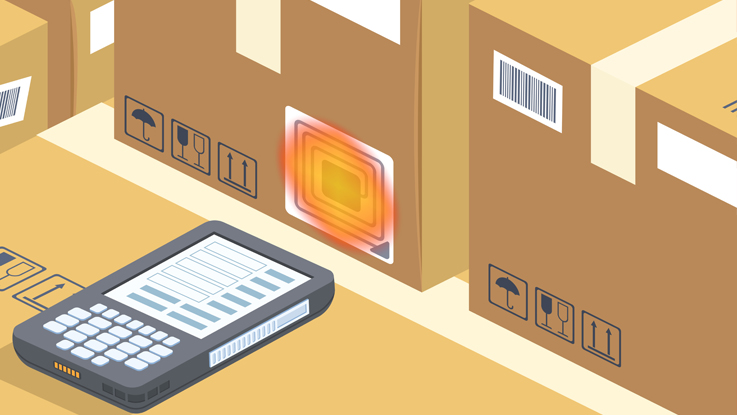
My First Day at a Fulfillment Center
Upon my arrival at the Depoter fulfillment center, I felt very overwhelmed and felt very little of against the towers and towers of shipment products. Shipments of products as far as the eye can see of all products from children wear to groceries to frozen goods and even designer bags.
Depoter’s warehouse and fulfillment center, at first glance, is a maze. But it is neatly and meticulously organized into sections that are rented by our clients. And further organized is by barcodes on each shelf and individual product that the customer provides us. Furthermore, the shelving was designed to accommodate both B2B and B2C clients.
After my tour, I had the opportunity to listen to inbound sales and public relations calls with the potential clients who were either D2C brands or suppliers on Amazon.ae and Noon.com. Inquiries about our storage facilities and the logistics of storing the clients’ products were asked and answered. Not only did I get the privilege of looking and understanding first-hand about the logistics, but I also understood how to build meaningful and long-lasting relationships with the clients by disclosing full transparency about the operations at Depoter and how it would impact the journey of a product from the client to the consumer of the product with our help.
Finally, I had the opportunity to look at the social media platforms of Depoter and figure out how to further appeal to clients by displaying an aesthetically pleasing social media presence to clients and thereby eventually, reeling in more clients. I understood the importance of this especially because of today’s importance on the digital aspects of running a business and maintaining an impression through the use of social media.

Fulfilment Centre vs. Distribution Centre: How Are They Different?
There is way difference between a fulfilment centre and a distribution centre. These terms seem confusing for many entrepreneurs. One should know the difference in functioning of both to choose between them, that which best suits a business. In this blog, we will bring to you a better understanding of both terms that will help you to choose the best option for your business.
A fulfilment centre facilitates the smooth running of inventories for e-commerce platforms or wholesalers, from the centre to retailers or customers. Fulfilment centres or 3PL (4PL or 5PL centres offer more complex logistic operations) provide you real-time tracking of merchandise and are often used by dealers whose merchandise or inventories remain less static for a longer period. Fulfilment centres integrate e-commerce websites with their warehouse management system (WMS) and provide kitting & customisation according to customer needs. They provide reverse logistic services as well for ‘returns.’ Most centres have a dedicated customer service team with whom you can always get in touch. However, such centres are not generally intended to ship products in bulk quantity and cannot provide housing of static inventories for longer periods. Some centres provide the warehousing but will cost you more than a distribution centre.
Distribution centres act as a hub where goods and products are redistributed. If your business has to ship a large quantity of items from one location to the other or retail dealers, choosing a distribution centre will be a prudent choice. It can offer housing for merchandise in large quantities for a longer period. It acts as a waystation and is not intended to meet individual customer needs. Generally, distribution centres are located quite away from markets. The cost of storage for a longer period will be less than fulfilment centres. Distribution centres generally have limited services for direct interface with customers. You cannot expect all ‘order fulfilment’ from a distribution centre.
So choose wisely the service you need depending on the type of your business and the product that you sell.

Your Best Order Fulfilment Partner in the UAE
Depoter was started with an aim to provide the best logistic service to e-commerce websites and direct-to-customer (D2C) online sellers. With profound experience in logistics and order fulfilment, we serve all across the UAE. We feel contentment that our clients are happy with the best fulfilment centre they have chosen for handling the pinprick of deliveries and they make potential usage of the saved time in growing the business to new heights.
The dark stores of Depoter are facilitated with the novel logistic technologies & trained staffs which get done the manoeuvre efficiently and promptly. This enables us to deliver your product within two hours, the very day or as you prefer! Depoter is the first dark store in MENA and has now over ten dark stores around the UAE dealing with over 50 clients. We have a build-in API to connect your online store or e-commerce website provider account like Shopify, WooCommerce, Wix, Magento, etc., with our e-commerce fulfilment software. Upon the placement of an order from a customer, the system will fetch it instantly due to integration and webhooks. The dark store closest to the customer is chosen and the inventories, which are stored safe and secure, are delivered. Our clients can track the inventory from the dark store itself. Depoter offer these services to clients with zero upfront cost and a pay-per-use policy. That’s the client only pays for the time he uses the space and fulfilment service. We are successful in fulfillment activities with 99.9% accuracy. We have made the most transparent solutions to provide the best client experience and the dark stores are scalable to manage unpredictable demands.
When the same-day delivery is available, a 9% higher cart conversion rate and a 32% increase in average cart value can be expected. Integrating with Depoter, the client is assisted to achieve maximum profit through a lower customer acquisition rate.
The success in every business lies in making the right choice at the right time. Depoter is the most reliable logistic service with the best technological advancement, customer care and proper tracking system. We like to see your business hike expeditiously.
The Difference Between Warehousing and Fulfilment
Warehouse and fulfilment centres are buildings where inventory for businesses are stored in bulk quantity. Third-party warehouses are offered to businesses with a long-term agreement and are more intended for business rather than business to business (B2B) or business to customer (B2C) logistics. If you need an area to store goods and products for a long-term, then choosing a warehouse is the wise option. However, if your goods and products are often moved to other locations, fulfilment will be a better option.
Warehouses lease out the housing facility for inventories on a long-term basis and no matter whether you use the space or not, charges will remain the same depending on the area. This may usher to loss if you are working with an e-commerce platform or if your business relies on retail orders. A fulfilment centre can act as a warehouse sometimes, but a warehouse will not act as a fulfilment centre. A fulfilment centre has facilities to provide real-time tracking of inventory, packing & delivery with the least possible turnaround time. You cannot expect such facilities from a warehouse. A fulfilment centre is oriented to store the inventory, process the orders, pick and pack items, labels them, etc., through a single channel.
These processes are the major difference that makes fulfilment different from warehousing. Warehouses are not meant to ship the product to customers. So if your business needs to move goods regularly to customers, fulfilment centre can make it for you. Best fulfillment centres like Depoter provide the service with zero upfront cost and no/limited monthly costs. Whereas in the warehouses you may have to pay an initial setup cost, maintenance cost, fixed monthly cost, etc. The type of storage house that best suits a business depends upon the type of business that you are running. If you are just looking for storage space for your business inventories for the long-term, find a warehouse economically. If you are working with an e-commerce platform or as an online store, you’re advised to choose a fulfilment centre. This is a lucrative option as you can invest more time in managing your business and increasing sales.
Inventory Management for Fulfilment Centers
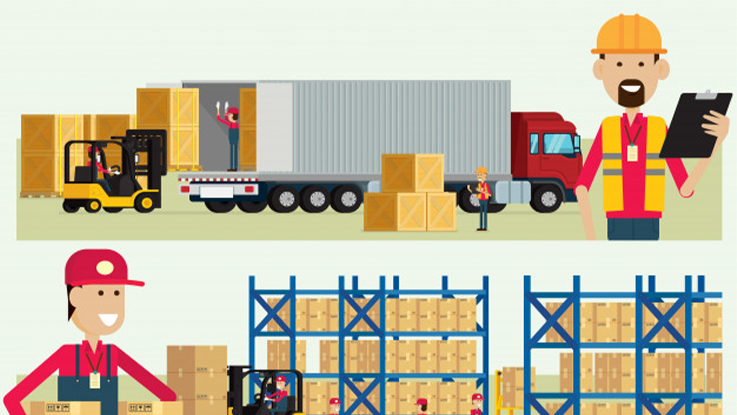
At any point in time, a fulfillment center should have the right amount of stock in their inventory, so an online business will never have a deficiency in product count, but it is also important not to have surplus products on shelves either to have storage cost at an optimized level. Implementing an inventory management process can help in tracking the exact number of stocks in real-time. The best fulfillment center, such as Depoter, would also ensure the calculation of re-order point (inventory forecast) considering the basket size and the number of orders for each of their clients.
What is Inventory Management?
Good online businesses require good organization. Inventory management is a key component of supply chain management. It is necessary for any business that is involved in buying or selling products. Stock improvement is the path toward keeping up the ideal proportion of stock expected to fulfill orders, keep storage costs low, and avoid ordinary stock issues, for instance, stockouts, and over-stocking. In many cases, businesses sell their product not only through one channel but through multiple sales channels like Amazon, Noon, Carrefour, Shopify, etc. In such cases of multi-channel fulfillment, the fulfillment center needs to ensure the stock count is synced between all the different sales channels to avoid any mistakes.
Stock improvement is an online business best practice and framework that ensures stock control is supervised capably via completing gadgets, and methods to follow stock dynamically. Inventory management supervises the flow of goods, from manufacturers to warehouses to the point of sale. It can be a very complex process especially for large organizations.
To keep the right amount of goods on hand and fulfill customer demand but stay profitable, several methodologies are used such as stock review, just in time methodology, and ABC analysis methodology and warehouse management system (WMS).
How inventory management is done
• Record accuracy: Incoming and active record keeping should be exact and stockrooms ought to be secure. It is important to make precise decisions about orderings, scheduling, and shipping.
• Cycle counting: Stocks are counted and updated on a periodic basis. This is often used with ABC analysis
• ABC analysis: under this method, you classify the inventory into three categories as A, B, and C. These categories are based on inventory value and cost significance.
• Stock review: is a regular analysis of stocks versus projected future requirements. This can be done through a manual audit of stock or by utilizing .
Depoter’s inventory management system connects the multi-sales channel orders and warehouse inventory of an online business. As orders come in, Depoter helps you pick, pack, and ship those orders with 100% accuracy. Once the products have been shipped the shipped orders will be deducted from the system, these stock changes are then updated across multi-sales channels, so that everyone is on the same page with what an online store has for sale. This way Depoter helps online merchants by saving time and money in managing and storing inventory and make quick delivery possible which can turn into a happy customer and reducing customer retention costs.
Don’t Depend on FBA as Your Only Fulfillment Method
As a result of the COVID outbreak, 2020 has been a wild year for e-Commerce, similarly, 2021 has been showing similar growth development. However, perhaps the best takeaway from this is that being excessively reliant upon any one fulfillment procedure is risky. Fulfillment by Amazon (FBA) is a go-to place for many sellers but in this blog, we will discuss how over-relying on a single fulfillment strategy can leave brands at risk.
What happens when you only rely on FBA?
Relying only on Fulfillment by Amazon (FBA) means going according to their flow and structure and following their rules and procedures which can be changed or updated instantly. With Amazon being one of the biggest online shopping sites, it should not come as a shock that the demand will seemingly increase at a very fast pace. In March 2020, Amazon confined certain item classes as customer demands surpassed FBAs available capabilities. As a result, Amazon promoted Fulfilment by Merchant (FBM) orders over Fulfillment by Amazon (FBA) orders to help relieve the burden on its overburdened framework. Not only that but also, Amazon further complicated the issue for Fulfillment by Amazon (FBA) dealers by increasing its Inventory Performance Index (IPI) several times over the year. Vendors who neglected to meet the new necessities confronted capacity limits, which implies they needed to either acknowledge the potential for sales loss due to out-of-stocks or amend their inventory network interaction to have the option to dispatch smaller orders more regularly into Amazon’s fulfillment center. That ends up being an intense request for many brands.
With sudden outbreaks such COVID-19 outbreak, it would have never been predicted and so businesses should always have a plan B as a backup to ensure sales, even in times of crisis, so they won’t face any challenges or loss.
Consequences of Being Unable to Fulfill Orders
At the point when sellers cannot satisfy orders, clearly, they are losing out on sales. But out-of-stocks have different ramifications too. Some are narrated below:
1. Marketing Productivity Suffers
At the point when an item is unavailable or out-of-stock, the item rank deteriorates as contenders fill the gap.
2. Impact on Market Share
Since your brand is unavailable, customers will go to contenders for their requirements. This compounds the effect on item rank, with contenders improving position while your rank weakens.
How can one avoid or reduce these risks during times of crisis?
Our answer is risk mitigation through diversified fulfillment. What different arrangements would sellers be able to use outside of Fulfillment by Amazon (FBA)? There are many options, however, here are a portion of the more conspicuous fulfillment techniques.
1. Fulfillment by Merchant (FBM)
Fulfillment by Merchant (FBM) is a model where the seller is liable for storage, put aways, handling, and shipping items to end customers. Some of the main advantages include:
• The absence of outside stockpiling and fulfillment expenses can increase margins
• As the owner of your own fulfillment organization, you are protected from one-sided policy changes and updates like those looked in FBA
• You may likewise appreciate simpler visibility into stock levels
• Sellers can list the same inventory on multiple channels like Noon, Carrefour, SharafDG, etc.
2. Marketplace offerings
Regardless of its huge platform, Amazon isn’t the only lion in the jungle. One effective approach to reduce the risk is to expand your business channels. By listing and selling products on different marketplaces, vendors can reach more customers and catch more deals.
3. Start your own website
Many D2C brands are launching their own websites on the builders like Shopify, Woocommerce, WIX, Magento, PrestaShop, NopCommerce, etc. On own website, D2C brands can reach more targeted customers and focus on creating brand valuations.
4. Dropship
In the drop-shipping model, marketplaces are connecting suppliers on their platforms. When the customer places orders, Depoter is splitting them and alerting the suppliers for the respective SKUs and quantities. In such cases, marketplaces do not invest in inventory and warehousing infrastructure but at the same time, there is no shortage of the inventory as it can be procured through dropship model.
Don’t rely only on FBA
Fulfillment by Amazon (FBA) is a vigorous offering, and it would be tremendously silly to dismiss it. In the case of selling on Amazon, you should utilize FBA; it just shouldn’t be your sole method of fulfillment.
Enrolling in Fulfillment by Merchant (FBM) with Depoter will ensure the safety of your business and reduce your risks of potential sales loss during times of crisis as compared to Fulfillment by Amazon (FBA). Similarly, you are protected from unilateral policymaking and have more control over your products and your sales.

Why Outsource FBM to Depoter?
Amazon has recently refreshed their Fulfillment by Amazon (FBA) delivery time for most of their product categories to almost 2 weeks, not only that but also Fulfillment by Amazon (FBA) have their limitations and restrictions on trivial things. This means that merchants who use Depoter’s fulfillment center to satisfy their Amazon orders can not only deliver over 2 weeks quicker than dealers on Fulfillment by Amazon (FBA), but also can store multiple items of different categories without any restrictions.
Why sellers use Fulfillment by Merchant (FBA)?
Fulfillment by Amazon (FBA) is help offered by Amazon, as a method for outside vendors to automate their order fulfillment and delivery administration. It is a simple idea: sellers sell, Amazon delivers. Sellers enroll in Fulfillment by Amazon (FBA) because it can allow Amazon to deal with all delivery, including returns, and warehousing their products in Amazon distribution centers, picking, and packing but that’s only the tip of the iceberg.
Some of the many reasons why vendors choose Fulfilment by Amazon (FBA):
1. Quick delivery: Items in FBA consequently get the Prime identification and qualifies for Prime free delivery to the client and delivery times.
2. Easy Shipping and Logistics: Amazon accomplishes practically everything. Vendors simply monitor their listings and ensure they are loaded on their items, and they then let the fulfillment be dealt with beginning to end.
As a result, the number of sellers wanting to enroll in Fulfilment by Amazon (FBA) has dramatically increased, which has led to a decrease in the storage space of Fulfilment by Amazon (FBA). That is the reason why Amazon has restrictions on items that are accepted from sellers, and only accept hot selling items.
Due to the COVID-19 outbreak, online sales have increased immensely and very quickly. Similarly, Amazon has a huge platform that reaches millions of people, so it shouldn’t come as a shock that it will be the most used platform. An increase in sales means an increase in number of orders placed and an increase in delivery and shipping.
“Amazon told consumers earlier this year that its paid-subscription Prime service is facing monthlong delays in shipping due to the coronavirus outbreak and that the company will focus on stocking and delivering higher-priority items.” – Amazon Prime suspends delivery promises; future of fast shipping under scrutiny
Venders online are expressing their worry over the limited FBA capacity, and how their organizations will be influenced accordingly. This delay may result in customer dissatisfaction, lower revenues and eventually the death of the product.
We recommend vendors to move to Fulfilled by Merchant (FBM) models rather than FBA to keep clients glad and sales channels moving along as expected. This can be done either by yourself from home, or by outsourcing and moving to a fulfillment center like Depoter.
Reasons to use Depoter for Fulfilment by Merchant (FBM)
1. Easy enrollment: Sellers can enroll with Depoter within days. You simply need to join, send us your stock, and afterward Depoter’s APIs will automatically fetch orders to us on your behalf for fulfillment. This implies you can outsource your fulfillment if it works for your business.
2. Quick deliveries: if a seller has a hot selling product being sold on Amazon, Amazon can enroll them in Seller Flex. This means that all the amenities and advantages offered by Fulfilment by Amazon (FBA) will also be offered to the seller storing their products in their own inventory or by outsourcing to Fulfilment by Merchant (FBM). This implies that vendors could arrange their amazon postings with free expedited shipping. Having quick delivery means a higher customer retention rate, lower cart abandonment, satisfied customers, better sales, and more revenues made.
3. Full range: With Depoter used as Fulfilment by Merchant (FBM) we can store all your products, not just hot selling products and manage your orders effectively and efficiently to lift the weight off you. We do not lock you into contracts so that you can outsource with us as long as it is profitable to you.
4. Omnichannel fulfillment: In addition, the fact that Fulfilment by Amazon (FBA) allows you to offer to target customers only through their platform, however, as a seller you might be interested in selling on other platforms like Noon, Carrefour, Sharaf DG, etc. With Depoter as your Fulfilment by Merchant (FBM) partner, you will have a superpower to sell your products on every marketplace without increasing your inventory count cause Depoter collects and fulfills orders from all these marketplaces.
Website vs Marketplace: How to choose your D2C channel
What is D2C?
Direct to consumer (D2C) is part of a sales program wherein an organization promotes and sells an item or service directly to consumers, removing the requirement for intermediaries.
Because of the internet, it’s easier for online marketplaces and eCommerce platforms to sell items directly to shoppers in a simpler and cost-effective manner compared to the early 2000s. All you need to do to begin is track down the correct platform to make sales, which includes choosing a marketplace or website.
For an organization to be able to sell to consumers, they need a place to sell from, such as a brick-and-mortar store, online, etc. In the case of online, organizations have two options: marketplaces and websites.
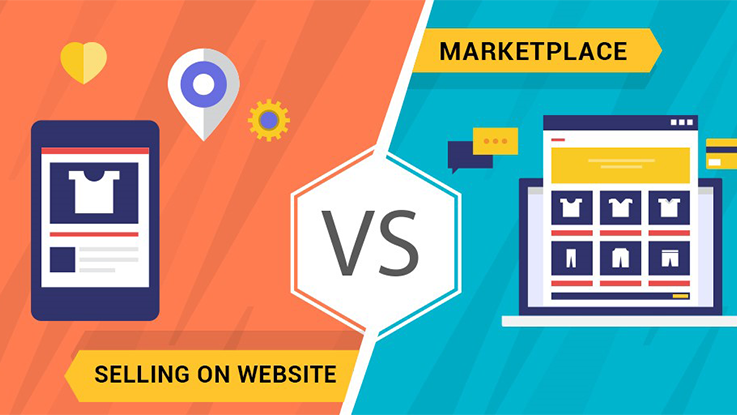
Marketplace vs. Website: Area of differentiation
Online marketplace
An online marketplace is a site where you (among other outside merchants) can list, advance, and sell items. Consequently, the marketplace charges a month-to-month expense or potentially takes a cut of the last sales cost. The most mainstream online marketplaces in the UAE are Amazon, Noon, Carrefour and SharafDG.
eCommerce website
An eCommerce website is a site that you run; where you list, advance, and sell your own items only. Most D2C brands will utilize an eCommerce stage to make their website and oversee advertising, deals and activities. Unlike marketplaces, D2C sellers make a brand valuation for themselves through websites.
Marketplace vs Website: Cost of selling
Online marketplace
Numerous marketplaces have reference fees, which go about as a commission when a customer makes a purchase on them. This drives down profitability a bit as the sales volume increases. Usually, Noon and Amazon share a price calculator on their websites through which the total cost of their fulfillment services can be calculated.
eCommerce website
There are no referral charges when selling on your own website, so you will save costs that from that perspective. Furthermore, it helps in shining your brand more compared to a marketplace while increasing stickiness and customer retention. However, the turn-off would be the costs to build and maintain the website. Furthermore, landing customers on the website and successfully converting them would require additional marketing spend. For new brands, selling D2C can likewise accompany a greater expense of client procurement without the constant flow of customers a marketplace can pull.
Marketplace vs Website: Barriers to entry
Marketplace
Online marketplaces have severe screening requirements you should meet before being acknowledged to sell on the platform. These reach from basically having an enlisted business and seriously valued items to showing critical aptitude and involvement with selling on the web.
eCommerce website
Theoretically, anybody can set up an eCommerce site, in any case, not every person has the specialized or showcasing capacities to plan a site and draw in clients. While eCommerce stages, for example, Shopify have simplified subjects that make making a site simple, they require a level of specialized commonality. This doesn’t mean you can’t figure out how to make and market a site utilizing eCommerce,/a> or re-appropriate these errands to specialists. It simply requires somewhat more exertion than selling through Amazon, for instance.
Marketplace vs. Website- which is best for your D2C store?
Eventually, the question between marketplace vs. website for your D2C store reduces to what you need for your D2C business. Marketplaces are ideal if you need to target a larger crowd and make an early foothold under another brands name.
If the focus is to target a curated crowd, fabricate an incredible brand, and set yourself up for long haul achievement, websites are better.
Or then again you can utilize both. Start your journey with a marketplace to generate traction and beginning brand awareness and afterward progress to a site to improve the client encounter and drive your business forward.
About Depoter
Depoter is a network of multi-channel fulfillment centers in the UAE that focuses on 2-hour deliveries. We believe that eCommerce startups should try to maximize sales and at the same time build a brand for themselves. As such, we support eCommerce companies by fulfilling their orders from both website (build on Shopify, Woocommerce, Wix, Magento, Prestashop, etc.) and marketplaces (such as Amazon, Noon, Carrefour, SharafDG, etc.)
Holiday Season? Tips for Fulfillment Centers
Holidays are the most wonderful time for many. It revolves around family, friends, celebrations and of course gifts. The happy spirit of holidays also brings in the biggest spike in online purchases and this influx of orders requires your fulfillment center to be holiday ready. It’s the busiest time of the year if you manage a fulfillment center. Your clients expect the online orders to be delivered effectively and efficiently. If you’re not prepared for it could get chaotic quickly. Handling this logistical challenge can make or break your company’s repute. We listed five tips for you to ensure that as a fulfillment center you are holiday-ready.
I. BE WELL STAFFED
Employing and training skilled personnel for the seasonal rushes can be a big challenge. It is best to begin the hiring process well in advance of the holiday season as new employees would require time for training for handling independent workload during an inflow of holiday purchases.
These candidates can be found through employee referrals. Monetary incentives or other forms of benefits can be offered to employees for the candidates hired through their referrals. This would help in ensuring that only a selection of highly qualified candidates are passed on to the hiring team.
Team up new recruits with the more experienced employees to guide them through the processes until they are confident and prepared to handle tasks on their own.
II. REVISING FULFILLMENT CENTER LAYOUTS
Holidays stack up orders for D2C brands and online sellers. This means a fulfillment center better be ready to accommodate the extra merchandise. To ensure increased efficiency you need to review and reorganize the layout at the forefront of the holidays. An optimum fulfillment center layout should facilitate you to keep pace with surging purchases and intricate processes related to gift wrapping.
Pick and pack lines should be organized to improve the station capacities. Bestsellers could be positioned to the most effective positions in increase pick times. Holidays demand a personalized touch to all the packages being received by the recipient which could range from premium packaging, personalized messages and exquisite gift wrapping. These premium services should be allotted seperate stations to avoid any collision or mismanagement.
Also, necessities for each pick and pack station should be arranged for ahead of time as a shortage of those supplies could obstruct the efficiency of fulfillment centers. Modifications like these can support in cutting expenses and guarantee optimum order turn time.
III. FORECASTING IS YOUR FRIEND
Getting holiday ready, the key initial step for fulfilment centres is to create forecasting models. Projections should cover order approximations coming in till the holiday season starting from at least two weeks ahead.
In addition to optimized layouts, order and inventory forecasting can be used to find out whether you require more maintenance and repair supplies before the holiday rush. If your facility was exhausted the previous season and required additional supplies or spacing, then most likely it would be required next year as well.
Incorrect or unfinished estimations could be dreadful as the holidays approach near. Look back at prior order patterns to recognize the numbers, render, and type of the products at the Stock keeping unit (SKU) level to assess future storage requirements.
Accurate predication can also help in understanding a breakdown of delivery hotspots so warehouse locations and storage areas can be prepared for appropriately.
IV. SOLID RETURNS / EXCHANGE SYSTEM
Handling reverse logistics is critical for any fulfillment center. It is a key factor to deliver supreme customer satisfaction. Holiday season brings in a loads of orders but on the flip side, many exchanges and returns are also placed within the same time. Organized stations for detailed inspections are also required be to in place to fast-track re-allocation and speedy shipment of products either to the customer of back to the retailer.
V. KEEP CLOSE WITH YOUR CARRIERS
Fulfillment centers should keep in frequent contact with their delivery partners and courier companies to ensure timely pick-up and delivery. During the holiday season, delivery and courier companies might themselves be swamped with peaks in demand. Hence, its critical to ensure prior planning is done with them in terms of additional orders from your side. This will help in making sure that your carrier partners are sufficiently equipped to cope with your expected order deliveries. Question carriers to ascertain their abilities to be able to adjust to unexpected surges in orders through the holiday peaks and gain a competitive advantage by negotiating early prices.
So, is your fulfillment center ready for holiday season?

How to Start an Online Store in 5 Steps
Since March 2020, the retail industry has been under constant pressure to innovate and adapt on how it attracts and engage with their customers. The most significant change of course is the falloff in physical store sales due to the Covid-19. Amidst these crises and un-certainty on reaching pre-Covid-19 traction level, many retailers are now looking to move into an online sales model.
In this blog, we will share tips on how a retailer can launch an e-commerce platform and set-up its fulfilment and delivery operations within a week!
1. Purchase the domain using GoDaddy.ae
Domain name is an address where internet users can identify and access your website. Select your domain name accurately which represent the nature of your business which will help customers to remember and use it as and when needed. Ex : www.amazon.ae, www.noon.com .
Why Godaddy?
Godaddy is one of the largest domain registrars and provide easy user experience for webhosting. Over 63 million domain names are already registered under Godaddy. Below are the simple steps to register your domain name.
Step 1 : Select your domain name
Step 2 : Check the availability of your preferred domain name on Godaddy.ae
Step 3 : Register your selected domain name with Godaddy.ae
2. Build an online platform using Shopify
Shopify is a web-based tool designed to help people build their own e-commerce store to sell products online. Shopify is designed in do-it-yourself model allowing first time users to set up their e-commerce stores without an external support. It also provides built-in payment gateway to further ease operations.
Why Shopify?
- Easy to setup, no technique skill set is required
- Provides wide variety of designs and templates to match your concept
- Easy integration with other applications
- Offers secure and reliable payment gateway integration
- 24/7 customer support
3. Market your online store digitally using Google, Instagram and Facebook ads
Once you are ready with your e-commerce website, the next step is to create the brandwarness. There are thousands of online stores available and many of them are very popular and having huge customer base.To face the competition it is necessary to reach out the customers through digital medium like Google ads and social media platform like Facebook and Instragram. Research studies shows that Google ads accounts for 18% of all ecommerce revenue. Facebook is having 2.38 billon active users and it allow many ecommerce companies to market their brands, product and services to a larger extent.
4. Start storing your inventory using Depoter.com
Storage of a physical goods before selling through online store is a big challenge. Warehouse management and inventory control plays an integral part in ecommerce business albeit adds various complexities. Major challenges faced by online stores when it comes to warehousing are warehouse cost, storage space and duration of contract, hiring skilled labors, inventory tracking and maintenance and the security and safety of the products.
Depoter: Ultimate one stop e-commerce fulfillment solution in UAE
Depoter is a tech company that stores inventory in its warehouses and pick, pack and deliver online orders for direct to consumers (D2C) brands and ecommerce platforms. E-commerce platforms are using its reliable fulfillment services, network of warehouses and connected fulfillment technology. Depoter empower brands and e-commerce platforms to focus on increasing sales while taking care of the entire backend logistics.
5. Get your orders fulfilled and delivered by Depoter
Backbone of all successful e-commerce business is a timely delivery of products to the customers. Reason behind the success of e-commerce business is that customer can order product within the comfort of their home and receive it within no time. Consistent and reliable delivery system is very essential to the success of online shopping.
Depoter: Same and next day delivery system in UAE
Depoter integrate online portal with our technology platform with a plug and play mode. E-commerce orders are directed to their warehouses nearest to the end customers which helps to improve delivery efficiency and cost.